#73 – Welcome, Again!

A lot has changed in the 2 years since this blog was launched, and I thought, it might be time to update my introduction.

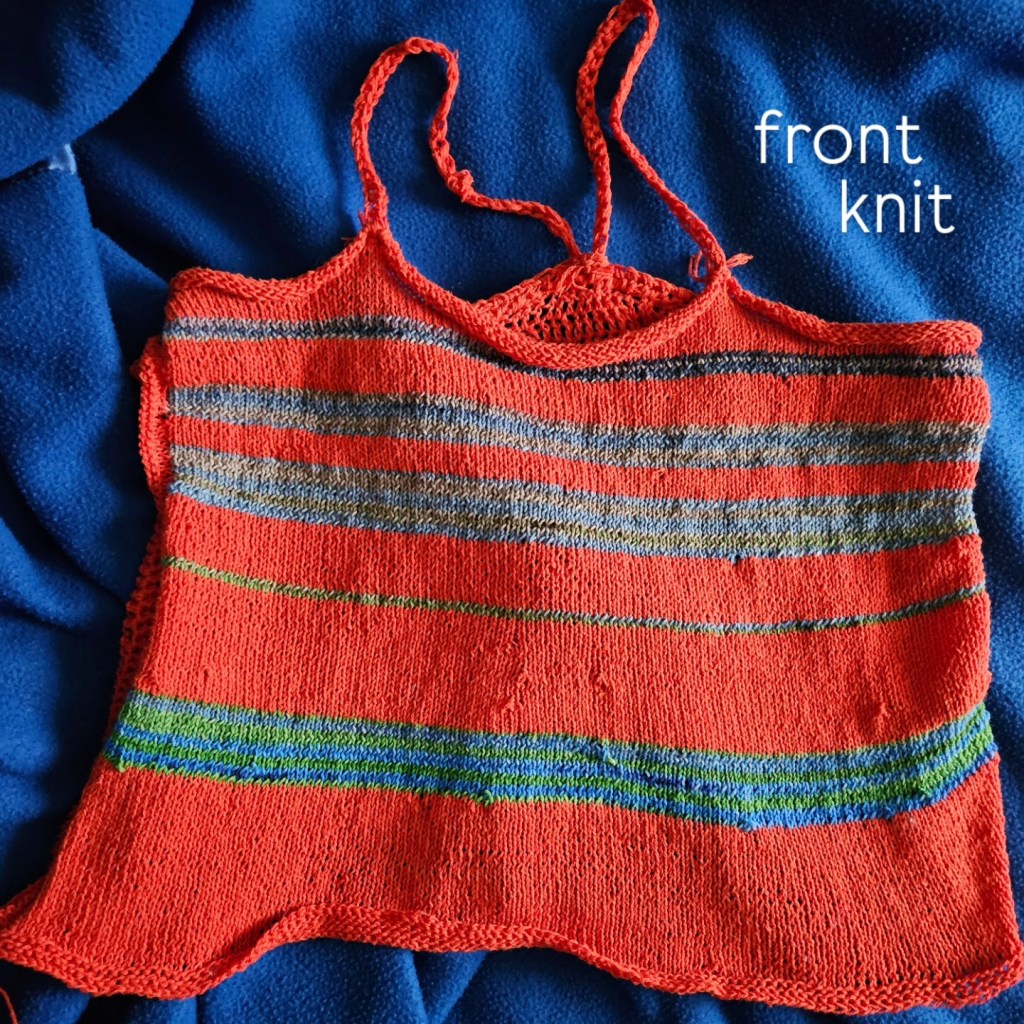
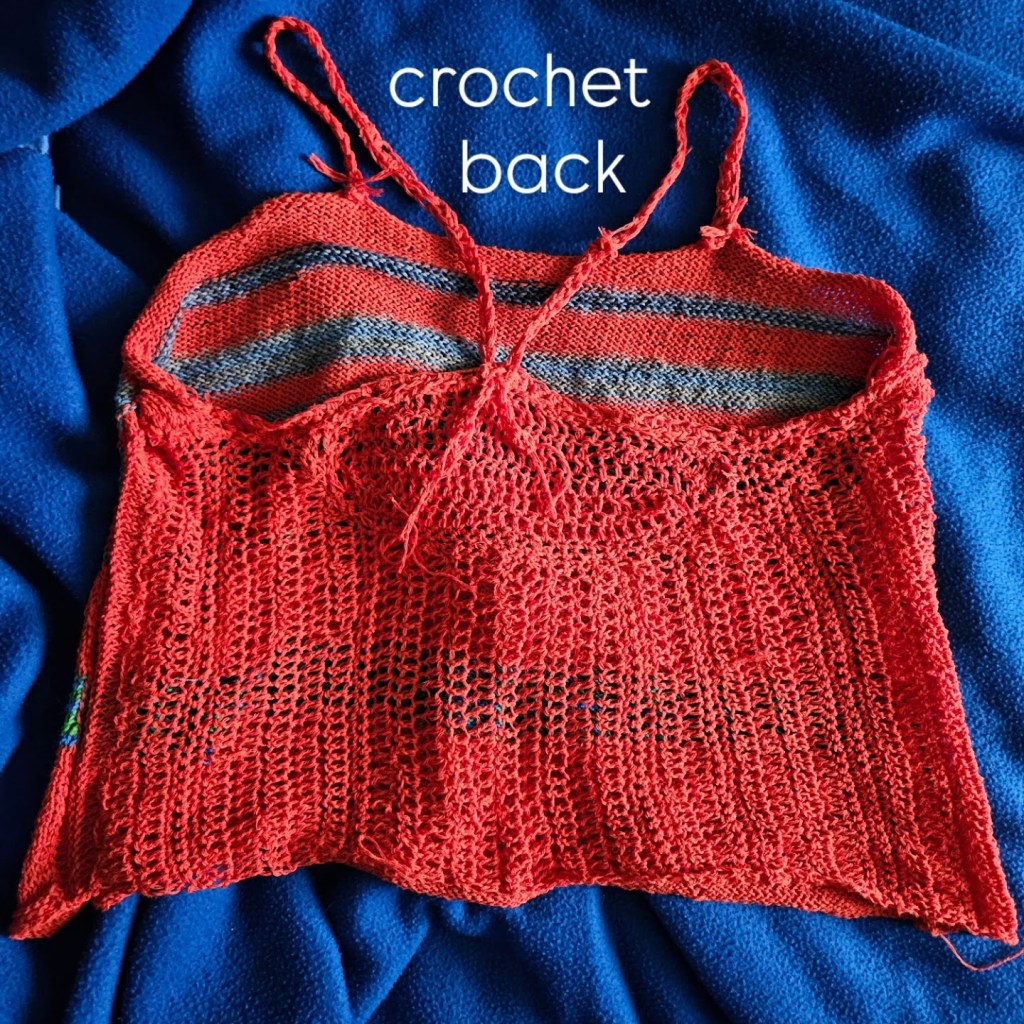
In 2023, my plan was to finding a new landing place for me to explore writing again, after Muirin Project, my blog from 2016-2019. I wanted to showcase my novel, catalog my knitting and sewing journey, journal my bible study, and share my love for creative expression in many artistic mediums.

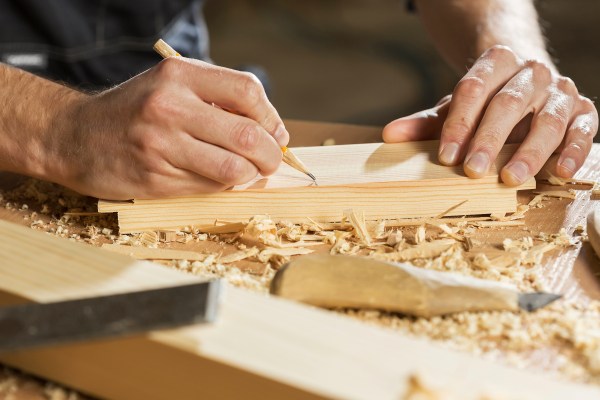
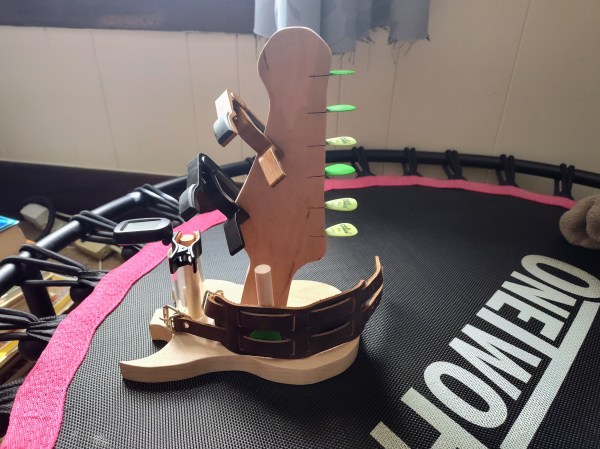
Now I have added some new things to the mix – Japanese learning, Kpop, garment workers/conscious consumption, and most excitingly: gardening! Which welcomed my husband to the site to share his experiences with gardening and bring awareness to why natural ecosystems, seed saving, and eating local matter. He is also preparing to share his other favorite hobby – woodworking.

Now, for something I question – should I change the site name? I am uncertain for SEO purposes and the likelihood of broken links. I don’t think it is wise. But this site is so much more than just my work, it is the harmonizing voices of myself and Kyle which is how I think the world becomes a better place – working together. Let’s keep the honmoon sealed. ❤

Featured post

What Is the Best Garden Seed Catalog for 2026?

Over the past month, I have been reviewing the garden seed catalogs that we have requested for 2026. In total, I looked at and scored nine catalogs. If you missed them, links for each review are located below, and for a refresher, here is the criteria I used to score them:

  • Number of pages – 1 point per page over 100 pages; minus-1 point per page under 100 pages.
  • New varieties – 1/2 (.50) point for each new variety for 2026.
  • Total number of seeds – 1/4 (.25) point per seed.
  • Selection of “Specialty Seeds” – By “Specialty Seeds,” I mean any specially designated seeds that are separated from the other seeds. Examples are All-American Selections, Italian Gourmet, and Indigenous Royalties. – 1 point will be awarded for each specialty category.
  • Images – 1 point if there is an image for every seed; 1/2 (.50) point if fewer.
  • Non-Seed Offerings – 1 point for each category (fertilizers, seed-starting items, merchandise, weed control, pesticides, garden gear, etc.)
  • How Is it Organized/Ordered? – 1 point if its order is a positive; minus-1 point if it’s a negative.
  • Beauty – This is completely subjective, but it’s my way of determining if it’s aesthetically pleasing to look at. Does it include original artwork? Are the images crisp and clean? Is the text easy to read? A maximum of 10 points can be awarded.
  • What Sets it Apart or Makes it Unique? – This is another subjective category. What about a catalog makes it stand out from the others? A maximum of 10 points can be awarded.
Seed Catalogs
2026 Seed Catalogs

Without further ado, here are the scores for the catalogs:

  1. Fedco – 543.25 Points
  2. Baker Creek – 451.25 Points
  3. Territorial – 417 Points
  4. Pinetree Gardens – 410 Points
  5. High Mowing Organic Seeds – 303.5 Points
  6. Seed Savers Exchange – 247.75 Points
  7. Southern Exposure Seed Exchange – 238.5 Points
  8. NE Seed – 221.5 Points
  9. Sow True – 193 Points

Do the Scores Match My Subjective Opinions of the Catalogs?

The short answer is no. When I was putting these reviews together, I looked at each catalog and wrote the review individually, so I didn’t pay attention to the scores and how they compared to each other. Solely based on my subjective views, my order would be:

  1. Sow True
  2. Southern Exposure
  3. Pinetree Gardens
  4. Fedco
  5. Seed Savers Exchange
  6. Baker Creek
  7. High Mowing Organic Seeds
  8. Territorial
  9. NE Seed

The biggest surprise here is that the lowest-scoring catalog, Sow True, is actually my favorite. I love the design and shape of their catalog even though it’s on the smaller side. Territorial’s catalog, which scored high, was one of my least favorite catalogs, although the 5-8 catalogs on my subjective list are pretty close together.

I think the reason for this discrepancy is that my scoring system placed a lot of weight on the number of pages in each catalog, with one point being awarded for each page over 100. The reason for that was to award seed companies for offering thick catalogs that go above and beyond. I still think it was smart to award the catalogs for how many pages, but perhaps points should have been given on a tiered basis (1 point for 100-110 pages, 2 points for 111-120, 3 points for 121-130, etc.) Another scoring system would have been to award one point for every 5 pages above 100.

Another reason is that my scoring system intentionally awarded the objective traits, such as the number of seeds being offered, new seed varieties, and non-seed offerings. This naturally rewards the larger companies that can offer more seeds than the smaller companies. I wanted to reduce the likelihood that my personal thoughts and feelings could unfairly create imbalance in the scoring system. That was successful, but I think I went too far in the opposite direction, and some of the most beautiful catalogs didn’t rank highly. Ultimately, it doesn’t matter, because I can still follow up with my personal rankings, but I will adjust the scoring system for next year in an attempt to be more fair.

What Did I Learn?

I learned that I love catalogs from the companies that go beyond simply selling seeds. As a gardener, you can buy seeds almost anywhere in the spring. Go to any box store, home improvement store, or Agway, and you’ll find seeds. But not all seeds and seed companies are created the same. Some seed companies are businesses and operate with the goal of turning a profit. Others care more about educating gardeners and building a sustainable future than making money. You can perceive that difference in the companies’ catalogs. I prefer the catalogs that offer more than seeds. They’ll tell stories and teach lessons. I want to buy from companies that give back and support small farmers.

I know that I learned a lot by reviewing the seed catalogs. It forced me to slow down and really pay attention to what I was seeing and reading. Now, we begin the process of selecting the seed varieties that we want to buy, and I’ll be curious to know if we buy the bulk of our seeds from the highest-scoring catalogs (subjective or objective) or if they’ll be evenly divided. I’ll follow up with a post on what seeds we order. Thank you for reading.

Will Golden Hour Part Four Be the Game Changer?

On February 6, Ateez will release their fourth installment of the Golden Hour series. I am excited, after a year and some change of not loving the direction of their sound, will this bring back my hype for Ateez? I hope so!

I discovered Ateez in 2022, not long after their “Don’t Stop” single was released. I was hooked and dove head first into the lore, the sound, the vibes. From their debut Pirate King through the ebbs and flow of Hala Hala, The Wave, Wonderland, Say My Name. I was impressed by their unconventional sound. Their vocals have depth, and the dancing true rhythm. The World was my first album series release to take in.

Each part of this trilogy is a sonic treat. The World Part One drops us in a secret resistance announcing itself. Part Two, follows the members while they navigate the covert mission in the world, and Part Three is the showdown where you learn about a secret school they escaped from. Bouncy will forever be my favorite release. It was such a fun time for Kpop.

In between The World and Golden Hour, the Ateez animal plushies were released. These “Aniteez” live on a floating pitate ship, sailing the skies. All in true concept form.

Next Golden Hour Part One released with a real world flair and explored LA and Mexican flair which I loved. Work helped me process buying a house. Siren and Arriba helped me get through the endless unpacking. This, on top of all their past discography, had me on the edge of my seat for whatever was next!

That would be Golden Hour Part Two, and the disappointing “Ice on My Teeth” title track and just okay B-sides that did not grab me. This had never happened to me as an Atiny! With anticipation, I hoped the next release would be a favorite – but it wasn’t. 😵‍💫

Golden Hour Part Three, was not as bad as Part Two, but dang I just didn’t vibe with it. That is the frustrating thing about art, if a piece of art doesn’t connect with you, you feel like you are stuck on the outside looking in.

But then, Golden Hour Part Three – In Your Fantasy Edition dropped and it sparked my interest again. I gave Lemon Drop another listen, and started to get the different musical format and style. I felt less like a fake Ateez fan, because after two straight releases of not getting it, I began to wonder – am I still a fan? Did I grow out of it?

So, with all that context, when I saw the trailer for the upcoming Golden Hour Part Four, and, I am seriously excited! It sounds like old Ateez but with the new sythesized into a great offering. I think my inner Atiny, may be on its way back!

From the preview Ghost reminds me of b-sides from The World era. Adrenaline has the emotion and power of Hala Hala, Guerilla, Wonderland, etc that pulled me in initially. Nasa, is reminiscent of Wave and the Golden Hour Part One era. On the Road, seems to be the synthesis of where their music explored in Golden Hour Part Three era but in a new way that I connect with. It reminds me a bit of The World Part Three as well! Choose is something new, I’m ready to give a try. It doesn’t sound like Ateez, more like NCT or a Stray Kids Japanese release – and that’s not a bad thing. 😃

I can’t wait to hear the full album and see if this is the missing piece that connects their discography into one melodious note, instead of a stunning concerto ending in a discordant crescendo.

Reviewing NE Seed’s 2026 Catalog

Ahead of the 2025 gardening season, one of my first posts on the blog was titled “Where to Buy Garden Seeds.” There was a heavy emphasis on the seed catalogs we requested, what we liked about each one, and the ones we purchased seeds from. This year, I’m doing things a bit differently by dedicating a post to each seed catalog. In each post, I’ll review the catalog, go over the things I like and dislike about it, and score the catalog. Here’s how I’m scoring all the catalogs.

Scoring Criteria

I’m going to be looking at the following areas and applying them to each catalog we receive:

  • Number of pages – 1 point per page over 100 pages; minus-1 point per page under 100 pages.
  • New varieties – 1/2 (.50) point for each new variety for 2026.
  • Total number of seeds – 1/4 (.25) point per seed.
  • Selection of “Specialty Seeds” – By “Specialty Seeds,” I mean any specially designated seeds that are separated from the other seeds. Examples are All-American Selections, Italian Gourmet, and Indigenous Royalties. – 1 point will be awarded for each specialty category.
  • Images – 1 point if there is an image for every seed; 1/2 (.50) point if fewer.
  • Non-Seed Offerings – 1 point for each category (fertilizers, seed-starting items, merchandise, weed control, pesticides, garden gear, etc.)
  • How Is it Organized/Ordered? – 1 point if its order is a positive; minus-1 point if it’s a negative.
  • Beauty – This is completely subjective, but it’s my way of determining if it’s aesthetically pleasing to look at. Does it include original artwork? Are the images crisp and clean? Is the text easy to read? A maximum of 10 points can be awarded.
  • What Sets it Apart or Makes it Unique? – This is another subjective category. What about a catalog makes it stand out from the others? A maximum of 10 points can be awarded.

Links to Other Reviews

Pages – -13 Points

The 2026 NE Seed catalog is 87 pages, which makes it the smallest catalog that I’ve looked at this year.

New Varieties – 4 Points

The catalog lists 8 new varieties for the 2026 gardening season, all of which are listed at the beginning of the catalog.

Total Number of Seeds – 217 Points

The catalog and company are selling 621 vegetable, 179 flower, and 68 herb varieties for a total of 868.

Specialty Seeds – 2 Points

NE Seed sells specialty seeds in the following areas: All-American Selection and Italian Gourmet Collection.

Images – .5 Points

The catalog doesn’t include an image for each seed listed, so it only gets a half-point.

Beauty – 6 Points

The NE Seed catalog is a bit different from the others I’ve reviewed in that it’s more commercially focused. Not all of their seeds are sold in typical retail packets, and you can buy nearly all their seeds in bulk. It also lists commercial gardening tools. And if you spend over $1,000, you get 10% off, but that total is unlikely to be reached by a typical home gardener. That being said, the catalog is still beautiful to look at. The images are crisp and clear, and the company is clearly dedicated to transparency.

Non-Seed Offerings – 4 Points

NE Seed offers inoculants, seed-starting supplies, planters, and what they call hard goods.

Unique Quality – 3 Points

Because the catalog is partially focused on commercial growers, it’s less unique than the other catalogs I’ve reviewed. If 5 is the score I’d give an average catalog, the NE Seed catalog has to be scored slightly below average for uniqueness. It is everything you’d expect from a seed catalog in that it lists a large variety of seeds and features clear descriptions. There are also a few recipes sprinkled in, but it doesn’t really go beyond that.

How Is It Ordered/Organized? – 1 Point

The catalog is categorized into vegetables, herbs, and flowers and then each category is alphabetized.

Review

It’s difficult to compare this catalog to the others because I think it’s intended for a different audience and serves a different purpose. It has a commercial focus but still applies to the average home gardener, but you have to know that not all seeds are available in packets. There’s still a large variety of seeds sold in packets, but it can be frustrating to read a seed’s description only to learn that it’s unavailable in a packet. In general, NE Seed sells a large variety of vegetables, including a selection of heirloom seeds. They also pledge the same Safe Seed Promise as the other companies, indicating their dedication to seed saving practices. Also, because they sell commercially, their prices are excellent on a per-seed basis, but you may need to make sacrifices to find varieties sold in smaller quantities. Overall, I would recommend checking out NE Seed and their catalog. They’re a good company, but it’s wise to have the proper expectations.

Score: 224.5 Points

Why I Quit the Clique and Cliche of Twenty One Pilots

So it’s 2026, and if you’re online, there is a good chance you have seen the 2026 to 2016 posts. The nostalgia for 2016 is real, even making me look at one of the most volatile years of my life through rose-colored glasses. But even though the 2010s were full of change for me, beginning with my junior year of high school, and ending with 2019, globally leading us into the pandemic. How weird is that? I got my license, my high school diploma, traveled to Europe, graduated from college, got married, moved out, had my first job (more like jobs), tried to have a career, reunited with my dad, met my siblings, moved out of state, wrote a novel, and lost several loved ones in 2016. My family fractured – it was so much personal change! But even so, I miss the optimism of the hipster era. I miss the simplicity of the pre-AI era and the pre-social media domination of our world. We were less logged in, less screen addicted. I’ve been drawn to watching Portlandia again, yearning for a coffee shop to spend the day in while listening to indie music, a simpler time. This week, I’ve found myself walking down memory lane in the form of 2010’s alternative music. Bands I haven’t thought of for a decade – The Joy Formidable, Phantogram, Joywave, Bear Hands, Sir Sly, etc. But one band, I determined in this holiday, into nostalgia I will not listen to again, even though they were a band I loved in the 2010s – Twenty One Pilots.

This is a bit of an oddball post. I haven’t listened to Twenty One Pilots since 2018, but for a three-year stretch, they were my favorite band. I collected merch, CDs, and ate up the lore. The para-social relationship was built on mental health struggles, faith, and being “quirky” felt comfortable. I mean, this was the mid-2010s and the height of the “not like other girls” trope. I relished in the alternative feel of their music, what I now understand to be noise music, and the darkness I felt in my own life craved the outlet to plug into. Josh understood my shyness, and Tyler understood the anxiety and depression I was feeling at the time. It felt safe because they were “Christians” and their music had “biblical references,” but they were also questioning everything and challenging the void. I didn’t see at the time how much un-aliving yourself idealization there was in the nihilistic moments of their music. The more I listened to their music, the more depressed I felt, and that is where I began to wake out of the dream I was walking in. I haven’t seen them or their music the same way since.

I think right now, with all the ways Christianity is being watered down, misused for political manipulation, and trampled upon by religious fundamentalists, I don’t want to listen to a band that is “somewhat Christian” again. That is not an estimation of their music either; that is what I found when I looked at the TOP subreddit today. That sentiment reminded me of what turned me off the most from their music, Tyler’s waffling. Or should I say deconstructing? That was another discussion I found on the subreddit. Now it is only fair to discuss this, with my own struggles out in the open. There were some things that came to light in recent months about someone I know, who is a pastor, which contradict the Bible, and it made me furious. Combine that with the DHS sharing misquoted scripture to claim their racism and violence as a “holy” thing turned me into this character.

What has my spiritual life been like in 2025 and now in 2026? Clinging to who I know God is in the midst of all these evil, power-hungry syncophants. Have I been reading my Bible daily? No, I have been a slacker. Have I been praying consistently? Yes, more than I have been reading my Bible. Have I been avoiding Christian culture? Yes. Where have I found myself gravitating towards? People who are acting out their faith and non-believers acting in ways that mirror what the Bible calls us to do. Never in this muck and mire have I wanted to imagine a world without God. If anything, it has made me crave God’s presence in this world with more frequency. It has to be a real connection. Faith is not a feeling, and it is not something you choose one day and rip apart the next. It calls for trust and for submission to align every part of your life under what you believe in. Faith is telos. Faith does not exist in a vacuum, nor do our relationships. Some days, having faith in good triumphing over evil feels like an extremely radical thing. There is no space for indecision.

Now, Tyler is allowed to feel and think what he wants, as long as he is not hurting anyone. I don’t care. But do I think he is a good example? No. There is an immaturity to his faith. A fence sitting that is only hurting him. As Earl Smooter says in Sweet Home Alabama, “You can’t ride two horses with one ass, sugarbean.” My need for conciseness and clarity is, for sure, part of my neurodivergence. I like it when people communicate directly. Honestly. I prefer the path laid out by another favorite artist.

I give life to my words
(Yeah, I’m doing what I say)
I reach heights from the dirt
(Yeah, I’m doing what I say)
You know I bite the way I bark
(Yeah, I’m doing what I say)
(Doing what I say, doing what I say)

Creed by Stray Kids

Decision matters. Being aligned with what you believe in, in every aspect of your life, which takes being truly honest with yourself, will bring mental peace. Mental peace was something I never personally felt from their music. I could feel the overthinking, tearing at the seams, the complete drifting in the current. It could be dressed up with lore or cringing lyrics, but the identity was never solid. Taking time away from their music gave me such relief. Ironically, my time of being part of the Clique was followed by a period of listening to mostly worship music for a few years before landing in K-pop. I think I personally matured out of the place where the Clique remains, waiting for identity. Where their leader remains. I think it is easier to not confront ourselves than it is, to have these times of personal crossexamination. But I think it’s a poor witness for your faith to never pick a side. How can something so integral to your life, your worldview, be left with unresolved doubt? What a loose end.

Deconstruct with integrity. Affirm your faith with integrity. I’m all in favor of confronting the church for its cowardice over injustice in America. Jesus showed us how. So did his servant Paul. But to leave it as a vague, Blurryface, is immature thinking. Through my research for this post, my searches for a clear answer about Tyler’s faith left me with more questions. Like a politician, it is vague and hard to define. Answers offered were that he can’t put it into words, he is wrestling, still defining, or can’t put it into words. What? More digging led to answers outlining TOP’s music as his way of communicating his search for understanding. To explore doubt by supposing a world without God – well, that’s why I found their music so dark! I am actively shaking my head. Again, there needs to be more maturity in songwriting, creative writing, philosophy – something to explore these themes with more nuance. I am just not impressed. Especially when you contrast Tyler’s exposition of his faith and the world we are living in, to the faith journeys of J.R.R. Tolkien and C.S. Lewis. In summation, I find the faith and doubt of TOP to be cliché and played out. Go deeper. Tell us what you believe in, like fans have requested, concerning the genocide in Gaza.

Now, TOP fans, this is my opinion, and everyone is entitled to their own opinion. None of this was written as an attack on you or your favorite group, just my honest reflection on a time of my life where Twenty One Pilots spoke to me. I’d say really the only part of this “lore” I’ve listened to is these four albums – Twenty One Pilots (2009), Vessel (2013), which was my favorite, Blurryface (2015 the album I started with, and Trench (2018), which I disliked so much I sold my concert tickets and donated my merch. You, Clique, have popularity on your side. I know I am in the minority, but I’m also in the minority of thinking Taylor Swift is a terrible songwriter, and that hasn’t stopped me.

What kind of music did you enjoy in the 2010s? Has your music taste changed? Thanks for spending time with me today, dear reader. Until next time ❤

Reviewing Southern Exposure Seed Exchange’s 2026 Catalog

Ahead of the 2025 gardening season, one of my first posts on the blog was titled “Where to Buy Garden Seeds.” There was a heavy emphasis on the seed catalogs we requested, what we liked about each one, and the ones we purchased seeds from. This year, I’m doing things a bit differently by dedicating a post to each seed catalog. In each post, I’ll review the catalog, go over the things I like and dislike about it, and score the catalog. Here’s how I’m scoring all the catalogs.

Scoring Criteria

I’m going to be looking at the following areas and applying them to each catalog we receive:

  • Number of pages – 1 point per page over 100 pages; minus-1 point per page under 100 pages.
  • New varieties – 1/2 (.50) point for each new variety for 2026.
  • Total number of seeds – 1/4 (.25) point per seed.
  • Selection of “Specialty Seeds” – By “Specialty Seeds,” I mean any specially designated seeds that are separated from the other seeds. Examples are All-American Selections, Italian Gourmet, and Indigenous Royalties. – 1 point will be awarded for each specialty category.
  • Images – 1 point if there is an image for every seed; 1/2 (.50) point if fewer.
  • Non-Seed Offerings – 1 point for each category (fertilizers, seed-starting items, merchandise, weed control, pesticides, garden gear, etc.)
  • How Is it Organized/Ordered? – 1 point if its order is a positive; minus-1 point if it’s a negative.
  • Beauty – This is completely subjective, but it’s my way of determining if it’s aesthetically pleasing to look at. Does it include original artwork? Are the images crisp and clean? Is the text easy to read? A maximum of 10 points can be awarded.
  • What Sets it Apart or Makes it Unique? – This is another subjective category. What about a catalog makes it stand out from the others? A maximum of 10 points can be awarded.

Links to Other Reviews

Pages – -10 Points

Southern Exposure Seed Exchange’s (SESE) catalog is the first one I’ve reviewed that is shorter than 100 pages. What is wild is that I didn’t even notice that it was thinner than the other catalogs until I looked at the page total. It doesn’t feel thin or short on offerings, but regardless, it loses 10 points for it.

New Varieties – 2.5 Points

I could only find 5 new varieties being offered by SESE for 2026. There may be more, but only 5 were mentioned on their website’s homepage. There is no option to filter for new varieties.

Total Number of Seeds – 221 Points

For 2026, SESE is offering 672 vegetable, 108 flower, and 104 herb varieties for a total of 884.

Specialty Seeds – 3 Points

They feature three types of specialty seeds: All-American Selection seeds, Slow Foods’ Ark of Taste selections, and seeds that come from Small Eco Farms. I’ve written about All-American Selection seeds and the Ark of Taste varieties elsewhere, but the Small Eco Farms are often family-owned, while some are cooperatives.

Images – 1 Point

There is one image or piece of artwork for every variety offered.

Beauty – 10 Points

SESE’s catalog is beautiful and colorful. The images are crisp and do a great job of advertising the product. There are also numerous drawings throughout the catalog that perfectly complements the images. Finally, the back of the catalog highlights some of their seed packets, all of which feature original artwork rather than images.

Non-Seed Offerings – 3 Points

There are only three types of non-seed offerings featured in the catalog: Books, Garden Supplies, and Seed-Saving Supplies.

Unique Quality – 7 Points

If a score of 5 points is an average catalog, SESE’s catalog is above average but not the most unique. Its size is pretty standard (about the size of a magazine), and it uses newspaper-style paper. Its unique qualities are rooted in the blend of images and artwork as well as the color coding they use to separate sections on a page. It gives each page a clean look and helps the buyer to see orient themselves and know what category the seeds belong in.

How Is it Ordered/Organized? – 1 Point

The catalog is categorized into vegetables, flowers, and herbs, and then each category is alphabetized.

Review

I’m ashamed to say this, but I almost forgot to request SESE’s 2026 catalog. When I initially requested catalogs in November, their website mentioned that their catalog wouldn’t be shipped until late December, which is fine. But I also couldn’t find a place to sign up for the catalog, so I had to remember to circle back and make that request, which I failed to do until early January. My forgetfulness is not indicative of the company or their catalog. It’s beautiful, and like many of the other companies, place an emphasis on stewardship and the future. They do this through their work with Small Eco Farms as well as the feature of Slow Foods’ Ark of Taste selections.

But my favorite part is their work to end food insecurity. They promote planting extra seeds that can be set aside for donations to food pantries and other charities. They also work with Seed Programs International, which is committed to providing quality seeds to impoverished communities in developing nations. That mindset and dedication are important to us.

Back to the catalog. I love the seed varieties they sell. There is a focus on seeds that grow well in the South, which makes sense since SESE is located in Virginia, so some of the seeds can’t be grown in Western Pennsylvania, but there are a lot of unique seeds. I also love that they feature notes about how to cook and eat the vegetables. The catalog provides a lot of information, and I’m very excited to order from SESE.

Score – 238.5 Points

A Brief History of the Cucumber

In early December, I started a series on the history of vegetables with a post on the history of the tomato. My plan was to make that a weekly or bi-weekly post; however, it’s now been more than a month since I wrote it. Holiday busyness along with the arrival of seed catalogs pushed this idea to the back burner for a bit, but I finally have some time to research and write the next installment: The history of the cucumber. Cucumbers are a very popular vegetable all around the world and play a key role in many cuisines. I knew that the cucumber was a global vegetable given the diversity of variety names that pay homage to where they originated. Boston Pickling, Armenian, and Shintokiwa are three popular varieties and point to three different parts of the globe. So, where did the cucumber originate, and how did it spread? I was shocked to learn its history and how it was transported to become a popular food item all across the world.

Foothills of the Himalayas

The modern cucumber dates back more than 3,000 years to India where it grew wild in the foothills of the Himalayan Mountains. This early predecessor to the modern cucumber was likely very bitter, which can still be found in today’s cucumbers. This bitterness works as a natural repellent against insects and pests. It started to be domesticated around 1,000 B.C., and soon, three varieties emerged: slicing (Eurasian), pickling (East Asian), and burpless.

The cucumber spread from there, moving east and west. While we don’t know exactly when the cucumber arrived in China and Japan, records show that they were present by the 10th century. We have better records for how it was transported west. Via trade routes, it made its way to Egypt, and the Old Testament book of Numbers, Moses wrote about cucumbers: “We remember the fish we ate in Egypt that cost nothing, the cucumbers, the melons, the leeks, the onions, and the garlic.” (Numbers 11:5) In Egypt, it was cultivated, as both the Greeks and Romans took a liking to it.

Greeks & Romans Brought Cultivation

We likely have the Greeks and Romans to thank for introducing the cucumber to Europe. Roman naturalist and author Pliny the Elder wrote that Emperor Tiberius ate cucumbers daily as part of his diet. The Romans also developed an artificial growing method similar to the modern greenhouse. They used sheet mica to cover the frames of the wall and roof. This allowed cucumbers to be grown and eaten all year long. At this point, cucumbers were eaten for both culinary and medicinal purposes, as it was believed that they could treat fevers, inflammation, and indigestion. Even in modern culture, cucumbers are often viewed as a dieting food due to its high water content.

In Europe

As mentioned above, the cucumber was likely introduced to Europe by the Greeks and Romans. Records show that emperor Charlemagne grew them in Italy in the 8th and 9th centuries, and we know that they were grown in France in the 9th century. The English word “cucumber” actually derives from the Latin “cucumerem,” which became “cocumbre” in Old French. Because of Charlemagne, who helps to unify Europe, the cucumber spread throughout Western Europe, and under King Henry VIII, it was first introduced to England in the 15th and 16th centuries.

Introduction to The New World

In elementary school, we learned the simple rhyme: In 1492, Columbus shared the ocean blue. It was an easy device to remember when he set sail for the New World. On that voyage, he and his sailors brought cucumbers with them, first arriving on Hispaniola in 1494. From there, it spread like many other vegetables: across the Caribbean and into North America. By 1539, Spanish explorer/conquistador Hernando de Soto identified cucumbers growing in modern-day Florida and judged them to be better than what was grown in Spain.

During the 16th century, trappers and fur traders transported them westward and used them as a bartering tool in trade with the Native Americans. This resulted in them quickly being grown throughout the Great Plains and Midwest United States. The growing popularity of cucumbers wasn’t consistent, though, and during the late-17th century, their popularity began to decline when people thought that raw vegetables were poisonous and only should be fed to farm animals. Thankfully, that erroneous opinion didn’t persist.

By 1806, eight distinct cucumber varieties existed in the United States. And later, in 1876, Henry J. Heinz, founder of the H.J. Heinz Company began making pickles commercially, and the cucumber’s popularity continued to grow. Today, cucumbers are grown commercially on every continent except Antarctica, and new varieties continue to be developed and released.

Types of Cucumbers

There are generally three types of cucumbers:

Slicing

Slicing cucumbers are ones that are typically sliced and eaten fresh. They’re crunchy with a juicy texture. Their skins are thicker, smooth, and stay uniform in color. They also tend to be longer cucumbers. Some popular varieties of slicers include Straight 8, Marketmore, Muncher, Suyo Long, and Armenian.

Pickling

Pickling cucumbers are often shorter varieties that have less uniformity in color. Their flesh is drier, which makes them perfect for pickling because it efficiently absorbs the pickling liquid. They can be cut into spears or coins, and some of the smaller varieties can even be pickled whole. Many pickling cucumbers also have a more compact growing habit than slicing varieties. Popular varieties include Boston Pickling, Homemade Pickles, National Pickling, Arkansas Little Leaf, and Bushy.

Burpless

Burpless cucumbers have been bred throughout the centuries to cause less burping than a standard cucumber. Cucumbers contain cucurbitacin, which can cause digestive issues, including burping, in humans. Burpless varieties have less cucurbitacin in them, which means fewer digestive issues. Many slicing cucumbers are burpless, but not all of them. Popular varieties include Armenian, Suyo Long, and Summer Dance.

I hope this brief history of the cucumber was informative and that you were able to learn something new. I know that I did.


Sources

A Refined Approach to Our 2026 Garden

On the Saturday before Christmas, Magz and I met at our favorite local coffee shop to hang out and discuss our plans for and thoughts about the 2026 garden. While it was definitely a low-key affair, it was a productive meeting, and we left the coffee shop with clarity over our upcoming garden. Items we discussed included:

  • Vegetables we want to grow again vs. new vegetables we want to try vs. vegetables we won’t grow again in 2026
  • Growing habits/types of vegetables that we are interested in
  • Seeds vs. starts for each vegetable

In the end, we were able to refine our approach to the 2026 garden and feel confident in our plan. Here are some of the decisions we reached.

What Vegetables Are We Growing in 2026?

There are a number of vegetables that we have decided to not grow again in 2026. They are beets, carrots, tomatillos, greens, and bok choy. We were unsuccessful in growing beets and carrots in 2025 and have never had luck with bok choy as much as we love them. We’ll likely revisit all three again in the future. We didn’t enjoy eating tomatillos as much as we thought, so we won’t dedicate garden space to them again this year. Finally, we enjoyed the mustard greens we grew, but we ran out of ideas for how to use them. They needed to be harvested all at the same time, and it became overwhelming.

The vegetables that we’re growing again in 2026 are beans, broccoli, bunching onions, corn, cucumbers, eggplant, ground cherries, melons, peas, peppers, potatoes, pumpkins, squash, and tomatoes. We either had success with all of them in 2025 or want to have another go at growing them.

Finally, there are three new vegetables that we want to try: leeks, okra, and cauliflower.

Varieties We Won’t Grow in 2026

There are also a number of varieties that we attempted to grow in 2025 that we won’t try again in 2026, but it doesn’t mean we’re writing off the entire vegetable or fruit. These are:

  • Melons: Tigger, Ali Baba, Noir des Carmes, and Kajari
  • Beans: Chinese Red Noodle Yard Long
  • Squash: Zapallito Del Tronco
  • Tomatoes: Yellow Pear, Queen Aliquippa

There were various reasons for not growing these varieties again. Some were because we didn’t like the flavor (Tigger, Kajari), others were because of the texture (Chinese Red Noodle Yard Long bean, Zapallito Del Tronco), and determining when the tomatoes were ripe was a nightmare. Finally, the Ali Baba watermelon probably would have been delicious, but it requires a longer growing season than we can consistently expect and want a shorter-season watermelon for 2026.

Growing Habits/Types of Vegetables That We’re Interested In

In 2025, we learned what growing habits and vegetable types that we like and dislike growing. That was refined during our meeting:

  • Beans – As many bush habit plants as possible, with one or two pole bean plants sprinkled in.
  • Cucumbers – Fewer plants overall, with most having a compact growing habit.
  • Melons – Short-season varieties, with an emphasis on ones that were bred for cooler environments. Also interested in growing varieties that can be trellised.
  • Tomatoes – As many determinate varieties as possible, and none that stay yellow or green when ripe. They’re too difficult to know when they’re ready to be picked.

A common theme is that we want as many compact plants as possible. While we have plenty of room in our garden, my preference is to not have vines all over the place. Last year, we had vines intersecting each other, which made it difficult to know where each vine originated. Plus, with compact plants, we can actually plant more things.

Seeds vs. Starts

Last year, I was all about starting as many varieties from seeds as possible. We did end up buying some vegetable starts from our local greenhouse, including tomatoes, peppers, eggplant, tomatillos, and ground cherries. This year, we’re going to be really intentional about what vegetables and varieties we buy seeds for and which ones we get starts for.

For example, if it’s a new vegetable we haven’t successfully grown before but want to try, we’ll likely buy starts for it. Broccoli, cauliflower, and ground cherries fall into this category. We want to get really good at growing a vegetable before trying to start it from seed, removing one potential point of failure. There are also some vegetables, like eggplant, that we bought starts for and had a lot of success. We simply want to replicate that success in 2026. We’ll also likely supplement our tomatoes with starts to increase the likelihood that we have plenty of tomatoes for sauce.

Basically, it boils down to this: if it’s a vegetable we have experience with, we’ll grow it from seed. If it’s one we’re inexperienced with, we’ll buy a start.

Final Thoughts

If there’s going to be a theme for this year’s garden, it’s “improvement and refinement.” We want to get really good at growing the vegetables we are already good at. We’re placing an emphasis on growing fewer varieties and vegetables but having a high success rate with the ones we do grow. Last year, we were so excited to have an in-ground garden that we picked far too many varieties, and toward the end of the season, it became a bit overwhelming. This year, we’ll have fewer varieties but grow more of each variety and have an abundant harvest.

Now that we’re in the new year, the excitement is building for the upcoming garden. All but one of our seed catalogs have arrived, and we’re starting to narrow down what seeds we’re going to order. It’s wild to think that we’re only a few months away from getting back into the dirt.

If We Were Villains

I read a book, that woke me up from a dream. At least that is what it felt like. That book was by M.L. Rio, entitled “If We Were Villains” a dark academia book compared to the “Secret History” by Donna Tartt. But honestly, I found this book to be far more about literature and what happens to your brain when you lose yourself in Shakespeare, than just a “dark academia” book.

It reminded me of the time we spent in high school studying Shakespeare’s plays and sonnets under the intense direction of my English/Speech teacher.

In English class, we would not simply read and discuss, we would perform. To my chagrin, we were tasked with memorizing scenes and performing them in front of the class, either solo or in pairs. I vividly remember performing the balcony scene from Romeo and Juliet, and reciting Mark Antony’s speech from Julius Caesar in a bed sheet toga over my clothes. Probably red faced, and heart pounding by the need to make eye contact as part of the assignment.

Later, when we dove deeper into the plays, I remember reading many parts for Hamlet, Macbeth, Romeo and Juliet, Julius Caesar, King Lear. Performed with fake swords and random props with our desks pushed in a corner to make a stage floor in the front of the room.

For senior year, we went to see two plays in Stratford, Canada at their globe theater. We saw Taming the Shrew, and later on As You Like It which I preferred. Although I struggled to follow at points, I loved how the play felt like it swallowed up the actors in a world all their own, in verse and story that has endured for centuries.

That is what I felt once again, reading “If We Were Villains” like I was back in Stratford, in the audience. The way Rio pairs plays to the plot, shows a deep intelligence for theater in a way, I don’t think many authors could do.

Some claim the plot was predictable, but I’d say, too mamy twists would have spoiled the point of this book. Which I believe is a love letter to the stage, and the pressures, and the bizarre obsessive love that comes with passion for you craft. I could have done with less of the f-word, it was a bit grating, so was the amount of drinking and drug use. I’d compare it to Skins UK, but I understand everyone’s college experience is different. I appreciate that all the main characters were in the early twenties, with the source material being so dark.

Anyways, I came away from this book feeling inspired. Inspired to read and study Shakespeare once again, not for a grade this time, but to remember how to tell a story. I’ve felt the desire to write another work of fiction, but loose all momentum once I begin writing. Because no matter what your opinion is of Shakespeare, there is no denying that he could write a good story, stories that continue to remain popular for the stage and film. If I want to remember how to write, this is a good place start, along with reading other books. Like I’ve reflected on before, to write you must read.

Now, before I end my reflection, I’d like to talk about something that is weighing on me. The shooting and killing of Renee Good by ICE agents, who shot her inside her car in broad daylight, in Minnesota.

This was an illegal and evil act, but it is just one of many evil acts carried out by organizations violating my country’s constitutional ammendments.

In addition to that the people who are being kidnapped, and persecuted by racism and hate, we must stand with them. They are suffering. We cannot ignore their pain. As a believer it is clear what we are called to do.

“Carry each other’s burdens, and in this way you will fulfill the law of Christ.”

Galatians 6:2 NIV

So my fellow Americans, if you are under the spell of political manipulation, and believe the acts of ICE are necessary – wake up and speak up against evil. If you are believers – wake up, repent, and speak up against evil.

Reviewing Territorial Seeds’ 2026 Catalog

Ahead of the 2025 gardening season, one of my first posts on the blog was titled “Where to Buy Garden Seeds.” There was a heavy emphasis on the seed catalogs we requested, what we liked about each one, and the ones we purchased seeds from. This year, I’m doing things a bit differently by dedicating a post to each seed catalog. In each post, I’ll review the catalog, go over the things I like and dislike about it, and score the catalog. Here’s how I’m scoring all the catalogs.

Scoring Criteria

I’m going to be looking at the following areas and applying them to each catalog we receive:

  • Number of pages – 1 point per page over 100 pages; minus-1 point per page under 100 pages.
  • New varieties – 1/2 (.50) point for each new variety for 2026.
  • Total number of seeds – 1/4 (.25) point per seed.
  • Selection of “Specialty Seeds” – By “Specialty Seeds,” I mean any specially designated seeds that are separated from the other seeds. Examples are All-American Selections, Italian Gourmet, and Indigenous Royalties. – 1 point will be awarded for each specialty category.
  • Images – 1 point if there is an image for every seed; 1/2 (.50) point if fewer.
  • Non-Seed Offerings – 1 point for each category (fertilizers, seed-starting items, merchandise, weed control, pesticides, garden gear, etc.)
  • How Is it Organized/Ordered? – 1 point if its order is a positive; minus-1 point if it’s a negative.
  • Beauty – This is completely subjective, but it’s my way of determining if it’s aesthetically pleasing to look at. Does it include original artwork? Are the images crisp and clean? Is the text easy to read? A maximum of 10 points can be awarded.
  • What Sets it Apart or Makes it Unique? – This is another subjective category. What about a catalog makes it stand out from the others? A maximum of 10 points can be awarded.

Links to Other Reviews

Pages – 58 Points

Territorial Seeds’ 2026 catalog is 158 pages.

New Varieties – 46 Points

Territorial is offering 92 new varieties for 2026: 23 vegetable, 64 flowers, and 5 herb seeds.

Total Number of Seeds – 278 Points

They are selling 698 vegetable, 325 flower, and 89 herb seeds for a total of 1,112.

Specialty Seeds – 2 Points

Territorial offers two specialty seeds: All-American Selections and seeds that are part of the Territorial Select Maintenance Breeding Program.

Images – 1 Point

There is one image for each item offered.

Beauty – 8 Points

The catalog is lovely to look at. It features beautiful images and is very easy to read.

Non-Seed Offerings – 18 Points

Territorial offers non-seed items in the following categories: potting, containers, seed starting, irrigation, trellising, soil testing, season extenders & mulches, row covers, labeling, fertilizers & amendments, insect & pest control, beneficial insects, bees & bee supplies, tools, books, composting, greenhouse, and storage.

Unique Quality – 5 Points

Territorial’s catalog is wonderful and offers everything that you would expect from a seed catalog; however, it isn’t overly unique. It features everything you want but doesn’t stand out from any of the others.

How Is it Ordered/Organized? – 1 Point

The catalog is categorized by vegetables, flowers, and herbs and then each section is alphabetized.

Review

Time to be honest: We received Territorial’s catalog last year and didn’t enjoy it, but that wasn’t the company’s fault. We used to watch a YouTube channel and the people were big fans of Territorial. However, as the channel’s direction and the people’s approach to life changed, it put a sour taste in my mouth about Territorial. It’s unfair, but it’s the truth. I didn’t request their 2026 catalog, but it arrived in the mail one day, and I was fully prepared to not have an interest in it. But I flipped through it and was excited about how beautiful it was as well as how many unique varieties it featured. It reminded me why I requested their catalog in the first place.

The 2026 catalog is as beautiful as the previous ones have been. The cover artwork is gorgeous and features, insects, bees, and a butterfly. They offer bean and tomato varieties that I haven’t seen anywhere else. It’s a great catalog with competitive pricing that will result in us buying from them this year.

Score – 417 Points

The Search for Affordable Yarn – A Review

When my go-to yarn, Big Twist, was temporarily discontinued in 2025, I felt adrift in a sea of unfamiliar yarns with unfamiliar prices. Which raised an interesting question: what will be my new tried and yarn? I thought I would share this journey with short reviews of the yarn I explored in search of a new favorite.

Yarn Criteria:

What am I looking for in a yarn? Big Twist was my favorite for a few key reasons – affordability, quality, color range, and ease of accessibility. Big Twist had a large selection of colors in a worsted weight that did not split easily or snag in knotted tangles. The skeins contained 380 yards, selling for 4.49 USD, which made sweater projects affordable. It was easy to source in person. Now I am not looking for in-person yarn purchases like I used to. It’s just not possible at this time.

Wool of the Andes

Wool, worsted weight, has a large color range, and can also be purchased in a superwash variety. This yarn is a Knit Picks, made from Peruvian Highland Wool is sold for 4.99 USD per 110-yard skein. I like how sticky this yarn is. When it is stitched up, it stays in place and has great stitch definition. It’s not too itchy. I am sensitive to wool, and I find this yarn to be fine. I also used the superwash for a hat, so that could be where the extra scratchy feeling came from. I think this is a great yarn for budget wool, and for beginners, the best part is that it arrives in a skein, not a hank that you have to unwind. Yes, I would buy this again. I just purchased this for an upcoming rabbit-related project.

Mighty Stitch

Silky and soft. This yarn had great sheen for an 80% acrylic, 20% wool fiber. It was labeled as worsted, but I found it to be too thin compared to my other worsted yarns, which created some issues in my project. This Knit Picks yarn is 7.99 USD for 208 yards. When I purchased this yarn, it was on sale, but still more than I am used to paying for acrylic. Due to the thinness of the yarn, I failed to meet the gauge. I found myself using a lot more than I thought I would. The most disappointing thing was the way it slides out of knots, which was a problem for the colorwork and color blocking sections. The yarn also doesn’t respond well to my husband’s beard. I found this out because I knit him a sweater, and the top was falling apart where it caught on his beard. Would I buy again? No. I don’t trust it not to pull out of the weave, and I felt let down by the price for the experience.

Lion Brand Pound of Love

I found these oversized yarn skeins at Michael’s, and I was thrilled. Lion Brand is a fantastic budget yarn that I used before on a previous sweater project. At 1020 yards for 11.99 USD, this yarn has been a game-changer for experimentation. I can try new projects, have room to mess up, or be able to make gifts, blankets, etc, on a budget. It does not split. I can knit or crochet easily, and it meets the gauge. My only negative critiques are the color range and the composition of the fiber. I wish there were more colors; the range is small compared to Knit Picks or Big Twist. I also wish acrylic were not made from plastic. I wish this were wool, and was kinder to the environment. Yes, I will buy this again. It is the best budget acrylic yarn I have found that is easy to purchase and would be a great beginner yarn to learn with.

Loops and Threads Soft Classic

Before Big Twist fully came back in Fall 2025, I thought Loops and Threads may be Michael’s brand expression of Big Twist, after they acquired Joann’s IP and the yarn vendor contracts, so I gave it a shot, and I have some mixed feelings. The color range is large, which I like. Some of the shades are lovely, and some are a bit garish. Some of the yarn dyeing is odd. Some of the texture of the acrylic fiber is also odd. It can be a bit limp, almost too soft. I love the mushroom and curry color ways. The black yarn I purchased, however, smelled like a cheap pleather purse- a bit fishy and a bit like burnt hair. I still can’t get the smell out of the yarn with airing out, Febreeze, and laundering. Maybe it was the chemical dye? For this reason, I have some pause. But you can’t beat the 3.99 USD price and 354 yards per skein. Let the creativity reign! Yes, I will buy again.

Palette

Palette Fingering Weight yarn from Knit Picks is a 100% Peruvian Highland wool yarn that has become my go-to winter accessory yarn. With its lightweight ply, I combine it with other yarns to create marled and warm hats, mittens, and socks. The hat to the left is three strands of Palette held together on US 7 needles. The hat to the right is made with two strands of worsted-weight acrylic (Big Twist) and one strand of Palette. It’s a non-superwash and has a lovely squish to the skeins. This yarn is already skeined up, no Hanks to unravel, and contains 231 yards for 5.49 USD per ball of yarn. I will rebuy. I actually panicked on New Year’s Eve, that I had drained my whole stash, to find they were at the bottom of a tote bag.

Caron Cakes

I have worked with two Caron Cake varieties in 2025 – Blossom Cakes and Big Cakes. The Blossom Cakes are a blend of 61% cotton and 31% acrylic fibers. They are variegated, worsted-weight cakes of 481 yards that sell for 14.99 USD per cake. They tend to do a BOGO sale at Michael’s, so I get them on sale, or else I would be less enthused about this item. The Big Cakes are also worsted-weight acrylic yarn, which is self-striping. I love the quality of the yarn, but the striping is a bit tricky. I am currently using them for blankets, but I did consider separating the sections of color to make something different. The Big Cakes contain 603 yards, which are sold for 14.99 USD. On a sale, you can make a blanket for a great price. For this reason, I will try the cakes again, with the proper project. They are complicated, and without a plan, they feel like a waste of money. With a good plan, they are a great resource.

Final Thoughts:

I found more options than I expected last year, and this led me to actually be happy that I had to find a new option for my tried-and-true yarn. Moving forward, I don’t have a sole favorite; instead, I feel like a nuanced palette of tastes is the better way to describe it. If you are a new knitter or curious about trying some of these yarns, I hope my thoughts helped. These are all my opinions, and all the yarn was purchased with my own money.

Create a website or blog at WordPress.com

Up ↑